Decidim in Service of Rebuilding Town Communities: An Unfulfilled Potential
By Urban Equipe & Octree
On May 28th, 2025, a devastating rockfall triggered by a glacier collapse destroyed large parts of the village of Blatten in the Lötschentalin the Canton of Valais, Switzerland. Although the town had been fully evacuated due to precise monitoring, one casualty was still reported. The disaster reshaped the landscape, buried homes, and disrupted every aspect of local life.
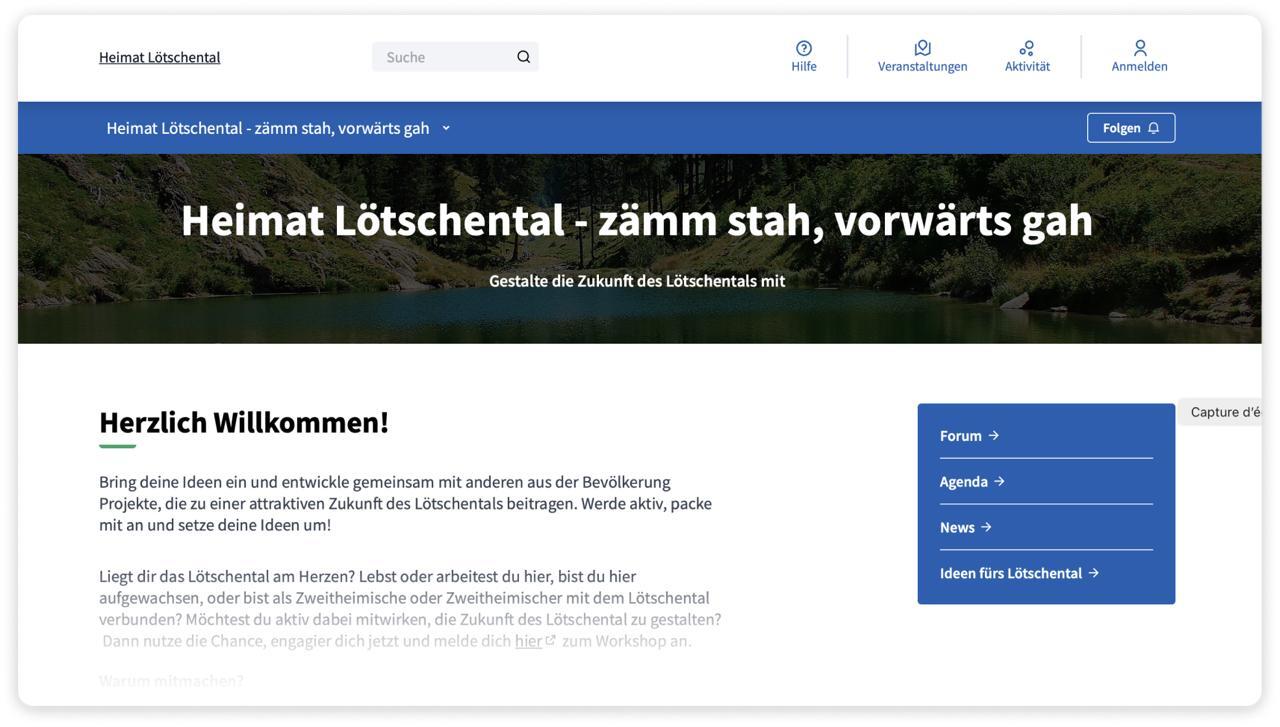
Before this catastrophe, Planval, a change management agency working with the valley municipalities on their long-term development strategy «Heimat Lötschental – zämm stah, vorwärts gah» (Homeland Lötschental – standing together, moving forward) suddenly faced a new challenge. Families were scattered across the canton and beyond, some staying with relatives, others in temporary housing. The tight-knit networks that define mountain communities no longer had a physical place to exist.
The Plan: Maintain Social Cohesion Through a Decidim Platform
At the first public workshop of Planval’s planning process, taking place only 4 weeks after the disaster, the idea emerged to create an online space for residents.
The central question was simple:
Could an online platform help the community stay connected, informed, and involved in decisions about their future?
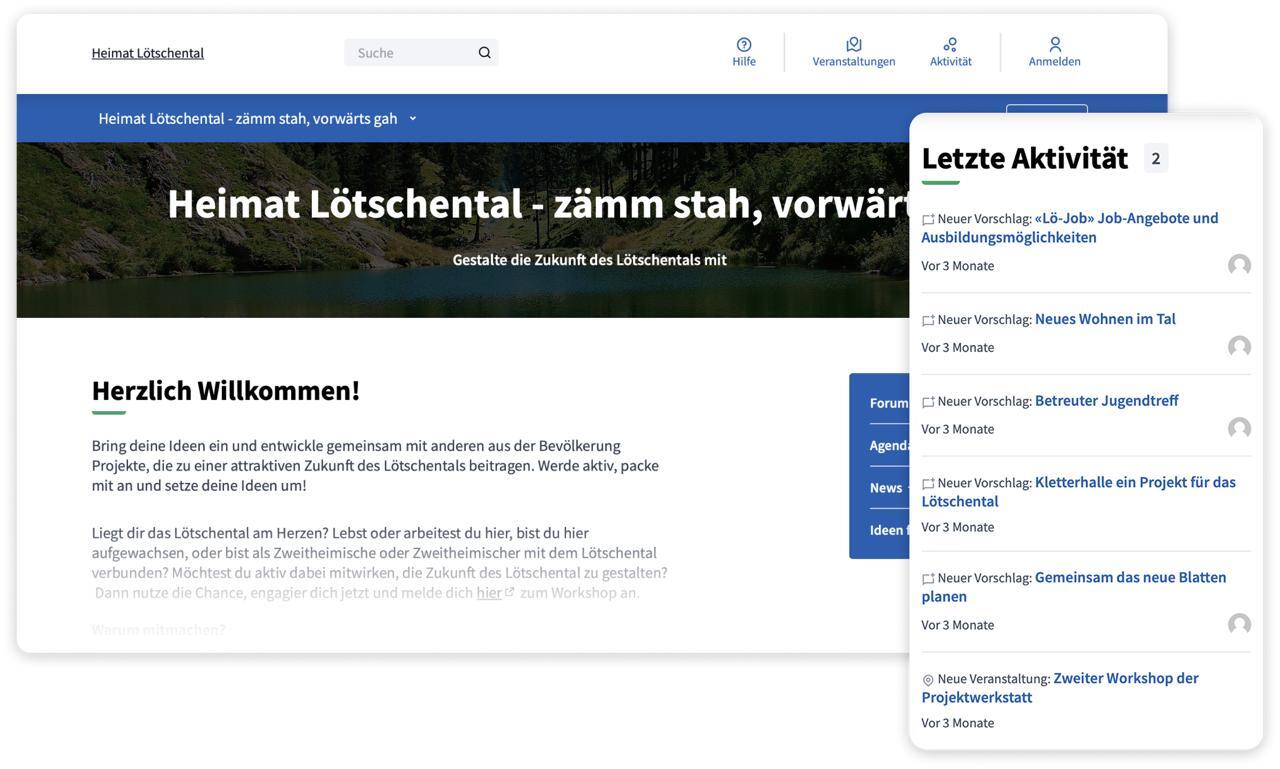
A Decidim platform (continue reading here if it you hear of Decdim for the first time) was envisioned with two main purposes:
1. A space to maintain community ties
With the meetings and debates components, evacuees would have been able to:
- announce informal gatherings
- share updates
- discuss what was happening in the valley
2. A space to discuss the future
With return, rebuilding, and relocation all uncertain, a proposals component could have supported the community by allowing residents to:
- collect ideas
- raise concerns
- brainstorm long-term development
This was not a commercial project. Both Urban Equipe and Octree offered to sponsor the platform. Octree would provide hosting on Voca, and Urban Equipe would contribute support, configuration, and initial content work.
Why it didn’t happen
Despite clear demand and enthusiasm from the population, the project never launched:
Learnings for the Decidim Ecosystem
Even though the platform was never launched, the experience provides important insights for the Decidim community:
1. In crisis situations, official approval may not be feasible
When authorities are overwhelmed, a community-driven or civilian-initiated approach might be the only way to get started. Residents often have the desire and capacity to self-organise, even when institutions cannot respond quickly.
2. The importance of social cohesion needs clearer communication
Digital platforms are not only for urban planning or structured participation processes.
In disasters, they can:
- reduce isolation
- support coordination
- share and discuss updates
- maintain a sense of belonging
An argumentation framework that highlights these aspects, especially for a technopolitical project like Decidim, would help future projects.
3. Decidim in Switzerland needs a stronger public-interest identity
A platform built as a digital commons benefits when it is seen as a civic instrument, not as a service offering. A stronger technopolitical presence can reduce barriers, especially when communities are vulnerable and trust is fragile.
It is possible that the initiative would have been received differently if it had come directly from the Decidim Association or from a local civic chapter. A clear civic identity might have reduced hesitation and increased trust.
What’s next?
As official Decidim partners, Urban Equipe and Octree remain committed to exploring how Decidim can support communities not only in participatory planning, but also in crisis response and recovery.
We are very happy that the Decidim coordination committee approved the creation of a Decidim Local Chapter in Switzerland (being the first local chapter worldwide), a low-barrier environment where Swiss municipalities, civil society groups, and communities can explore Decidim without heavy administrative processes or commercial interests.
If you are curious, have a similar idea, or want to test Decidim for your own context, feel free to:
Context
The conclusions of this project were presented at the annual Decidim Fest in Barcelona. You can rewatch this and other Decidim use cases here: